When trading internationally under FOB (Free On Board) terms, many shippers believe that once goods are loaded onto the vessel, their cost responsibility is complete. However, in reality, FOB container shipping costs involve multiple detailed charges that exporters must clearly understand—especially local charges at the port of origin.
In this article, we break down FOB shipping costs in detail and use a 40ft container (40GP/40HC) as a practical example to help you avoid unexpected expenses.
What Does FOB Mean in Container Shipping?
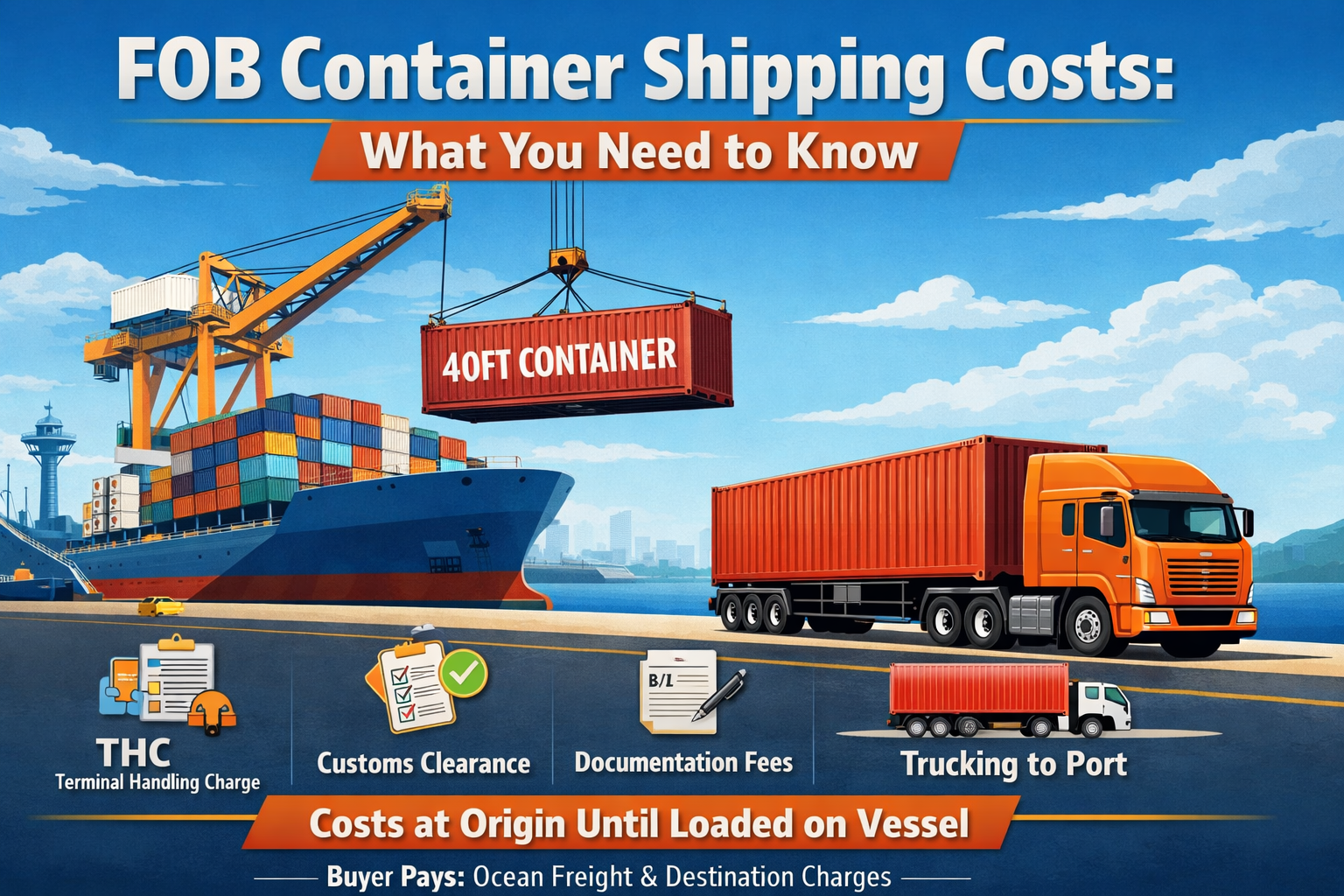
Under FOB Incoterms®, the seller is responsible for all costs and risks until the goods are loaded on board the vessel at the port of origin. After that point, the buyer takes over freight, insurance, and destination charges.
However, before loading happens, a number of origin local charges apply—and these are often underestimated.
Key FOB Shipping Costs You Should Know
1. Export Local Charges (At Origin Port)
Local charges are the core cost component under FOB terms. For a 40ft container, they typically include:
1.Terminal Handling Charge (THC)
Covers container handling at the port terminal
Includes gate-in, yard movement, and loading operations
Charged by the terminal or shipping line
Example (40ft container):
THC (40ft) is usually 1.8–2 times the 20ft rate, depending on the port.
2.Documentation Fee
Covers the preparation of export documents
Includes shipping instructions and draft B/L processing
3.Export Customs Clearance Fee
Filing an export declaration with customs
Includes HS code declaration and compliance review
4.VGM (Verified Gross Mass) Declaration Fee
Mandatory under SOLAS regulations
Ensures the container’s weight is accurately reported
5.Port Construction Fee / Port Miscellaneous Charges
Government or port authority–imposed fees
Often fixed per container.
2. Container Trucking (Factory to Port)
Although not always included in FOB pricing, inland trucking is frequently handled by the seller.
For a 40ft container, trucking costs depend on:
Distance to port
Whether the container is standard or overweight
Local road and fuel surcharges
3. Costs NOT Included Under FOB
To avoid confusion, it’s important to clarify what FOB does not cover:
Ocean freight
Marine insurance
Destination port charges
Import customs clearance
Duties and taxes
These costs are borne by the buyer, not the seller.
Example: FOB Cost Breakdown for a 40ft Container Below is a simplified example of typical FOB-origin costs for a 40ft container:
| Cost Item | Description |
|---|---|
| THC (40ft) | Terminal handling at origin port |
| Export customs clearance | Declaration and filing |
| Documentation fee | B/L & shipping documents |
| VGM fee | Container weight compliance |
| Port miscellaneous fees | Local port charges |
| Trucking (optional) | Factory to port delivery |
👉Total FOB cost = All origin-side charges up to vessel loading
Why FOB Costs Vary by Port and Country
FOB shipping costs are not standardized globally. They vary based on:
Port efficiency and congestion
Local labor and terminal tariffs
Shipping line policies
Country-specific regulations
As a result, FOB costs for a 40ft container in China may differ significantly from those in Southeast Asia or Europe.
Common Mistakes Shippers Make Under FOB
Assuming FOB includes ocean freight
Ignoring local charges like THC
Not confirming whether trucking is included
Underestimating cost differences between 20ft and 40ft containers
Understanding these details helps prevent disputes and improve cost control.
Final Thoughts: FOB Requires Cost Transparency
FOB is a widely used Incoterm, but it is not a “simple” pricing model. For a 40ft container, local charges such as THC, customs clearance, and documentation fees form a substantial part of the total cost.
To avoid surprises, always request a detailed FOB cost breakdown from your freight forwarder and confirm which local charges are included before shipment.
Frequently Asked Questions (FAQ) About FOB Container Shipping Costs
Q1. What costs are included in FOB container shipping?
A: Under FOB (Free On Board) terms, the seller is responsible for all costs at the port of origin until the container is loaded onto the vessel. This usually includes export local charges such as THC (Terminal Handling Charge), export customs clearance, documentation fees, VGM declaration fees, and applicable port miscellaneous charges.
Q2. Is THC always included in FOB pricing?
A:Yes, THC at the port of origin is normally included in FOB costs. Since THC covers terminal operations required to load the container onto the vessel, it falls under the seller’s responsibility in FOB shipments.
Q3. Are FOB charges higher for a 40ft container compared to a 20ft container?
A:Yes. FOB charges for a 40ft container are higher than for a 20ft container, especially for terminal-related fees such as THC. In most ports, THC for a 40ft container is approximately 1.8 to 2 times the 20ft rate, while some fixed fees (like documentation) remain the same.
Q4. Does FOB include inland trucking from the factory to the port?
A:Not always. Inland trucking may be included or excluded, depending on how the FOB price is quoted. In practice, many sellers include trucking as part of the FOB offer, but this should always be clearly confirmed in advance to avoid cost disputes.
Q5. Who pays ocean freight under FOB terms?
Under FOB terms, the buyer pays the ocean freight, along with marine insurance and all destination charges. The seller’s responsibility ends once the container is loaded on board at the port of shipment.
Q6. Are export customs clearance fees part of FOB costs?
Yes. Export customs clearance is a standard FOB responsibility. This includes customs declaration, HS code filing, and compliance with export regulations at the country of origin.
Q7. Why do FOB local charges vary by port and country?
FOB local charges vary due to differences in:
Port tariffs and terminal efficiency
Labor and operating costs
Local regulations and government fees
Shipping line and terminal operator policies
As a result, FOB costs for a 40ft container can differ significantly between ports, even within the same country.
Q8. Can FOB charges change after booking?
A:Yes. FOB charges may change due to port tariff adjustments, peak season surcharges, or regulatory updates. For this reason, shippers should always request a validity period for FOB quotations from their freight forwarder.
Q9. Is FOB cheaper than CIF for container shipping?
A:FOB is not always cheaper than CIF. FOB offers more cost control and transparency for buyers who manage freight themselves, while CIF may be more convenient for smaller or less experienced importers. The better option depends on shipping volume, destination, and logistics capability.
Q10. How can I avoid unexpected FOB costs?
To avoid unexpected FOB costs, always:
Request a detailed FOB cost breakdown
Confirm whether trucking is included
Verify THC and other local charges
Clarify cost responsibilities in the sales contract