
FUMIGATION AND COMMODITY INSPECTION: YOUR COMPLETE GUIDE TO EXPORT COMPLIANCE & RISK MITIGATION
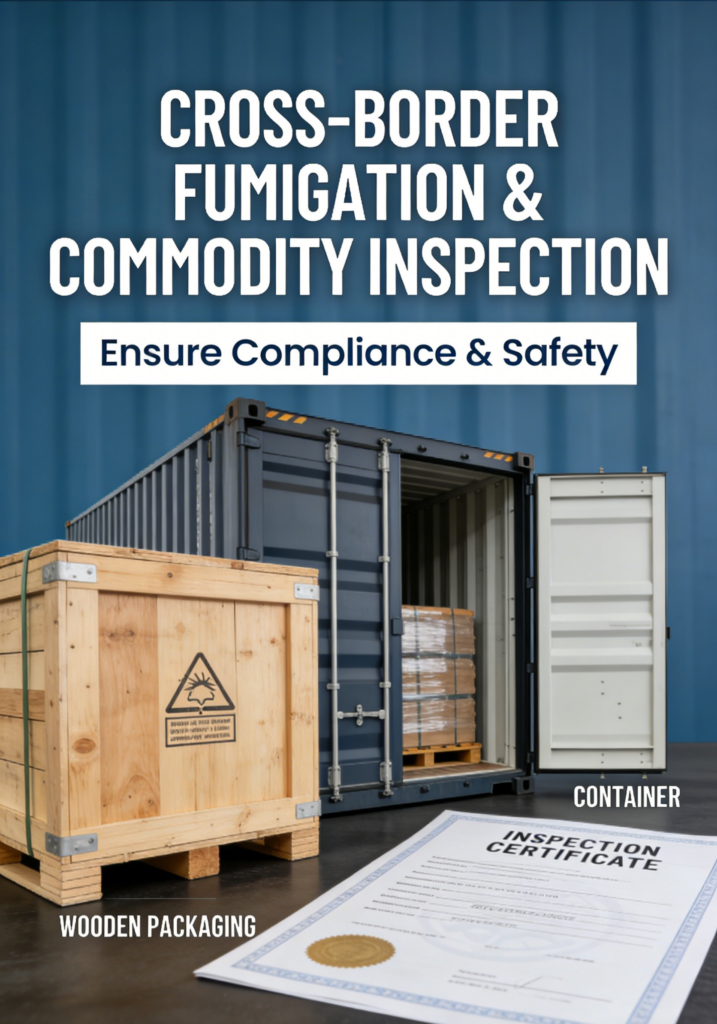
When you ship goods across international borders, two non-negotiable steps will make or break your customs clearance: fumigation and commodity inspection. These twin pillars of global trade logistics don’t just tick regulatory boxes—they protect your cargo from costly holds, seizure, or fines, while ensuring your shipments meet the strictest quarantine and safety standards of your destination country. Whether you’re exporting wooden packaging, bulk agricultural goods, electronics, or industrial equipment, understanding the ins and outs of both processes is the only way to eliminate supply chain disruptions and keep your cross-border operations running smoothly.
What Is Fumigation, And When Do You Need It For Exports?
Fumigation is a targeted, regulated pest control and sterilization treatment that you use to eliminate invasive insects, pathogens, and hidden infestations in your cargo before it leaves the origin country. Unlike generic surface cleaning, fumigation penetrates deep into hard-to-reach spaces—including the inner grain of wooden packaging, bulk grain silos, and tightly packed textile bales—to kill organisms that can spread disease or damage local ecosystems in the importing nation.
Core Purpose of Export Fumigation
- Stop the cross-border spread of harmful, non-native organisms that threaten agricultural systems, forests, and public health in your destination market
- Meet the mandatory phytosanitary and quarantine requirements set by the importing country’s regulatory bodies, such as the EU’s EFSA, the U.S. APHIS, or Australia’s strict AQIS rules
Goods & Materials That Mandatorily Require Fumigation
- All solid wood packaging materials, including pallets, wooden crates, dunnage, crating, and even wooden support beams for heavy machinery
- Bulk agricultural commodities, including rice, wheat, corn, soybeans, and unprocessed nuts and seeds
- Natural fiber textiles, leather goods, and fur products, which are high-risk for hidden pest infestations
- Plant-based products, including unprocessed timber, bamboo, and straw packaging materials
Industry-Standard Fumigation Methods (And Their Hidden Limitations)
Not all fumigation treatments are equal, and choosing the wrong method can result in failed clearance, even if you have a certificate in hand. Here are the most widely accepted treatments, plus the critical fine print most guides skip:
1.Methyl Bromide (MB) Fumigation
This is the most widely recognized fumigant for rapid pest elimination, but it is heavily restricted under the Montreal Protocol due to its ozone-depleting properties. The only exception is for emergency quarantine treatments for high-risk cargo, and many countries—including the EU, New Zealand, and Japan—ban MB-treated wood packaging entirely for non-emergency shipments.
2.Phosphine (PH₃) Fumigation
The go-to treatment for bulk grains, tobacco, and sealed container loads, phosphine is effective against most stored-product pests. Critical professional tip: phosphine’s efficacy drops sharply at temperatures below 15°C (59°F). If you’re shipping in cold weather, you must extend the mandatory sealed exposure time by 30-50% to meet import requirements; a standard 24-hour treatment in cold temperatures will not pass quarantine, even with a valid certificate.
3.Heat Treatment (HT)
The most widely accepted eco-friendly option for solid wood packaging, HT requires heating the wood to a core temperature of 56°C for a minimum of 30 continuous minutes. This kills all pest larvae and eggs without chemical use, and it is accepted in every country that follows ISPM 15 standards. Hidden compliance note: many uncertified treatment providers only heat the surface of the wood, not the core, which will result in your cargo being rejected at the destination port.
Critical Rules for Wooden Packaging Fumigation (ISPM 15 Compliance)
Virtually all major export markets enforce the ISPM 15 global standard for wood packaging material, and non-compliance is the #1 cause of fumigation-related clearance delays.
For example: if you’re shipping goods to the U.S., EU, or Australia, your solid wood crates and pallets must undergo either MB fumigation or HT treatment before shipment, and bear a permanent, legible IPPC mark. This mark must include the 2-letter country code (CN for China), the unique treatment provider number, the treatment method code (MB or HT), and the official IPPC logo.
Little-known compliance rule: your wood packaging can have no more than 3cm of total bark width, and a maximum total bark area of 50cm² per individual piece of wood. Even if you hold a valid IPPC mark and fumigation certificate, the quarantine authorities in the destination country will seize your cargo or mandate full re-treatment at your expense if your wood packaging has excess bark.
Step-by-Step Fumigation Process For China-Based Exporters
We streamline every step of the process to eliminate delays, but here’s the full workflow you can expect for compliant export fumigation:
1)Initiate the process through your freight forwarder: We connect you directly with CNCA-licensed fumigation providers and third-party quarantine agencies, so you don’t have to vet unqualified vendors.
2)Submit all required documentation 2 business days in advance: You’ll need to provide a full packing list, commercial invoice, sales contract, and a detailed description of your packaging materials (including wood type and total volume).
3)On-site or in-facility treatment: Our licensed partners perform the full treatment either at your warehouse, our designated facility, or the port of loading, with full chain-of-custody documentation.
4)Obtain your official compliance certificates: You’ll receive a formal Fumigation Certificate from the treatment agency, plus a Phytosanitary Certificate issued by China Customs for destinations that require it.
Commodity Inspection: Ensure Your Export Goods Meet Global Regulatory Standards
Commodity inspection is the formal, regulated assessment of your import or export goods by a government body or authorized third-party agency. We design our inspection services to verify that your products meet the mandatory quality, safety, hygiene, environmental protection, and labeling standards of both China and your destination country. Unlike fumigation, which focuses solely on pest and pathogen control, commodity inspection covers every aspect of your product’s compliance with global trade rules.
Why Commodity Inspection Matters For Your Cross-Border Shipments
- Guarantees your products are safe for end consumers, protecting your brand reputation and reducing liability
- Ensures you meet all international trade regulations and the specific terms of your sales contract
- Prevents costly product returns, recalls, or bans from your destination market
- Provides you with legally recognized proof of compliance, should any disputes arise with your buyer or regulatory bodies
Full Scope of Commodity Inspection For Imports & Exports
- Industrial machinery and heavy equipment
- Consumer electronics and electrical products
- Food, beverages, and agricultural commodities
- Chemicals, cosmetics, and personal care products
- Textiles, footwear, and light industrial consumer goods
Key Types of Commodity Inspection (And Which One Applies To Your Shipment)
Understanding the different inspection types will help you avoid unnecessary costs and delays. Here are the core categories, plus the little-known optimization tips most exporters miss:
1.Mandatory Statutory Inspection
China’s Law on Import and Export Commodity Inspection enforces this mandatory inspection, and you have no option to waive it for any goods that appear on China’s Mandatory Inspection List — a directory that links directly to your product’s HS code. Critical tip: Every single HS code carries a 4-letter inspection and quarantine code (M/N/P/Q) that tells you exactly which inspections you must complete: M marks mandatory inspection for imported goods, N marks mandatory inspection for exported goods, P covers required inbound animal and plant quarantine, and Q covers required outbound animal and plant quarantine. Many exporters only check whether their product lands on the list, but they fail to verify the specific requirements tied to these codes, and this common oversight directly causes incomplete and non-compliant filings.
2.Contractual Inspection
Your sales contract explicitly stipulates this inspection clause, and you and your buyer will jointly select and approve a third-party agency to perform the work. This inspection typically covers your product’s specifications, quality benchmarks, shipment quantity, and packaging standards, extending far beyond the mandatory requirements of statutory inspection.
3.Origin Pre-Inspection & Pre-Shipment Inspection (PSI)
Conducted in the exporting country before shipment, this inspection gives you a certificate of conformity that accelerates clearance in the destination country. Little-known optimization: for exporters who ship the same product regularly, we can arrange a pre-inspection verification and write-off scheme with China Customs. This allows you to complete a full inspection once for a 3-6 month period, instead of inspecting every single shipment, cutting your lead times by 3-5 days per order and reducing your overall costs.
4.Conformity Assessment for International Certifications
This inspection verifies that your product meets the requirements for destination-specific certifications, such as EU CE marking, U.S. FCC/UL approval, or UKCA marking.
Real-World Example: Electronics Export Commodity Inspection
To make this concrete, here’s how the process works for a Chinese electronics manufacturer shipping to the EU:
Before export, we arrange for a CNCA-authorized inspection agency to test the manufacturer’s products for electrical safety, electromagnetic compatibility (EMC), environmental adaptability, and performance. We verify that every unit meets the EU’s CE LVD and EMC directives, and that all labeling and user manuals comply with EU language and safety requirements.
Once the inspection is passed, we help the manufacturer obtain the required Clearance Notice and Quality Certificate, which are mandatory for customs declaration and EU market access. Without this inspection, the goods would be seized at the EU border, and the manufacturer would face fines or a permanent ban from the EU market.
Complete Commodity Inspection Workflow For China Exports
We handle every step of this process for you, but here’s the full compliance workflow for export commodity inspection:
1)Verify your inspection requirements first: We cross-check your product’s 8-10 digit HS code against China’s latest Mandatory Inspection List, and confirm the specific inspection and quarantine requirements for your destination country.
2)Submit your formal inspection application: We file your declaration directly to China Customs via the International Trade Single Window system, on your behalf.
3)Prepare full compliant documentation: You’ll need to provide your sales contract, commercial invoice, packing list, product test reports, safety certification documents, and the manufacturer’s registration number (for regulated products like food, cosmetics, or medical devices).
4)Document review and on-site inspection: Customs will either review your documentation for compliance, or conduct a physical inspection of your goods to verify they match your application.
5)Obtain your official clearance certificates: Once passed, you’ll receive the Exit Goods Clearance Notice for export customs declaration, plus any additional certificates (Quality Certificate, Health Certificate, Sanitary Certificate) required by your destination country.
Fumigation vs. Commodity Inspection: Key Differences & When You Need Both
Many new exporters confuse these two processes, but they serve distinct, complementary purposes in your export workflow. Here’s a clear breakdown:
| Aspect | Fumigation | Commodity Inspection |
|---|---|---|
| Core Focus | Pest control, sterilization, and prevention of invasive organism spread | Product quality, safety, regulatory compliance, and adherence to trade contract terms |
| Primary Target | Packaging materials, bulk agricultural goods, and high-risk organic materials | The finished product itself, plus its labeling, documentation, and performance |
| Governing Standards | ISPM 15, destination country phytosanitary/quarantine rules | China’s Import and Export Commodity Inspection Law, destination country product safety regulations, international certification standards |
| Key Output | Fumigation Certificate, Phytosanitary Certificate, IPPC Mark | Exit Goods Clearance Notice, Quality Certificate, Health/Sanitary Certificate |
- Fumigation of the wooden crates to meet ISPM 15 and AQIS quarantine rules
- Fumigation of the bulk agricultural goods to eliminate hidden pests
- Commodity inspection to verify the goods meet Australia’s food safety, quality, and labeling requirements
FAQ-Fumigation And Commodity Inspection
Q: How long is a Fumigation Certificate valid?
A: A standard Fumigation Certificate is valid for 21 calendar days from the date of treatment. You must complete all export customs clearance in China and import clearance in the destination country within this window. If the certificate expires mid-shipment, you will need to arrange re-fumigation and re-certification at the destination port, at high additional cost.
Q: Do plywood or fumigation-exempt wooden cases require treatment?
A: No. The global ISPM 15 standard fully exempts artificially engineered wood products — including plywood, particleboard, medium-density fiberboard (MDF), and oriented strand board (OSB) — from all mandatory fumigation requirements, as their high-temperature manufacturing process completely eliminates all pest infestation risks. Important note: For most destination countries, you must still affix the official IPPC mark to your exempt engineered wood packaging to secure smooth customs clearance without additional inspection checks.
Q: Is the IPPC mark required after fumigation?
A: Yes, without exception. Every piece of solid wood packaging must bear a permanent, non-removable IPPC mark directly on the wood (stickers are not accepted for most markets). The mark must clearly show the IPPC logo, 2-letter country code, unique treatment provider number, and treatment method code (MB or HT). Even with a valid Fumigation Certificate, wood packaging without a compliant IPPC mark will be rejected.
Q: What is the correct sequence between Commodity Inspection and Customs Declaration?
A: Inspection first, declaration second. You must complete the full commodity inspection process and obtain the official Exit Goods Clearance Notice before you can file your export customs declaration with China Customs. Filing your declaration first will result in an automatic rejection and may delay your shipment by 3-5 business days.
Q: How long does Commodity Inspection take, and what’s the cost?
A: For standard non-regulated products, commodity inspection takes 3-5 working days from the date you submit your full application and documentation. For regulated products (food, medical devices, cosmetics) that require lab testing, the timeline can extend to 7-15 working days. Costs vary widely, from a few hundred RMB for simple document checks to several thousand RMB for full lab testing and on-site inspection, depending on your product type, shipment volume, and required tests.
Q: Is Commodity Inspection needed for exporting small batch samples?
A: Samples of “non-trade nature” (with no commercial value, not for resale) can often apply for inspection exemption, but you will still need to submit a formal explanatory statement to Customs. Critical exception: regulated products, including food, medical devices, cosmetics, and hazardous materials, require mandatory inspection, even for single-unit non-commercial samples. There is no exemption for these high-risk categories.
Q: My shipment will be unpacked and reconsolidated at a transit port—will my original Fumigation Certificate still be valid?
A: In most cases, no. If your wooden packaging is opened, handled, or reconfigured at a transit port, the original fumigation treatment and certificate are invalidated. You will need to arrange re-fumigation and re-certification at the transit port before the goods continue to their final destination. The only exception is for sealed, unopened containers that remain intact through the entire transit process.
Q: Does cold weather affect my fumigation treatment’s compliance?
A: Absolutely. As we noted earlier, phosphine fumigation requires a minimum temperature of 15°C to be effective. Methyl bromide also requires extended exposure times in temperatures below 10°C. If you’re shipping in winter, you must inform your treatment provider in advance to adjust the exposure time and dosage to meet international standards. Failure to do so will result in failed quarantine checks, even with a valid certificate.
Q: Can I use a third-party inspection agency for mandatory statutory inspection?
A: No. Mandatory statutory inspection for goods on China’s Mandatory Inspection List can only be conducted by China Customs. However, you can use a licensed third-party agency to conduct pre-inspection testing, document preparation, and application filing on your behalf, which significantly reduces the risk of rejection and speeds up the process.
Q: What happens if my fumigation or commodity inspection fails?
A: If your fumigation fails, you will need to arrange re-treatment at your cost before you can ship. If your commodity inspection fails, Customs will issue a rejection notice, and you will need to either rework the goods to meet standards, or have the goods destroyed. Failed inspections will also delay your shipment by a minimum of 7-10 working days, and may result in additional penalties for repeated non-compliance.
Streamline Your Fumigation & Inspection With Our End-To-End Expert Solutions
At Apexlink Shipping, we deliver fully licensed, compliant fumigation and commodity inspection services tailored to your export needs. We don’t just tick boxes—we eliminate the risk of non-compliance, cut your clearance times, and simplify your entire export workflow, so you can focus on growing your international business.
Why Partner With Us For Your Fumigation & Inspection Needs?
One-Stop Integrated Service
Now that you understand the strict compliance rules, hidden risks, and multi-step workflows required for export fumigation and commodity inspection, we take the entire burden off your shoulders: we combine your international logistics, fumigation, and commodity inspection into a single, seamless workflow, so you never have to coordinate with 3+ different vendors, chase multiple contacts for real-time updates, or worry about misaligned timelines between your required treatment, inspection, and your vessel’s critical sailing date—we handle every single detail, end to end.
Unmatched Regulatory Expertise
We maintain long-term, direct partnerships with CNCA-licensed fumigation providers, accredited testing labs, and China Customs officials. Our team knows the ins and outs of every major destination market’s quarantine and inspection rules—from the EU’s strict ISPM 15 enforcement to Australia’s zero-tolerance AQIS requirements. We provide targeted, pre-shipment guidance to fix compliance gaps before they become costly problems.
Guaranteed Faster Clearance & Reduced Risk
We arrange your fumigation and inspection well in advance of your sailing date, ensuring all your formalities and certificates are completed on time, every time. This eliminates clearance holds, cargo seizure, unexpected re-treatment fees, and missed sailing dates, boosting your overall supply chain efficiency and reducing your total logistics costs.
Get Your Custom Quote Today!
No two shipments are the same, and we’ll build a tailored fumigation and inspection package that fits your product type, destination market, and timeline. Reach out to our team today for a free, no-obligation quote, and let us handle the compliance challenges so you don’t have to.