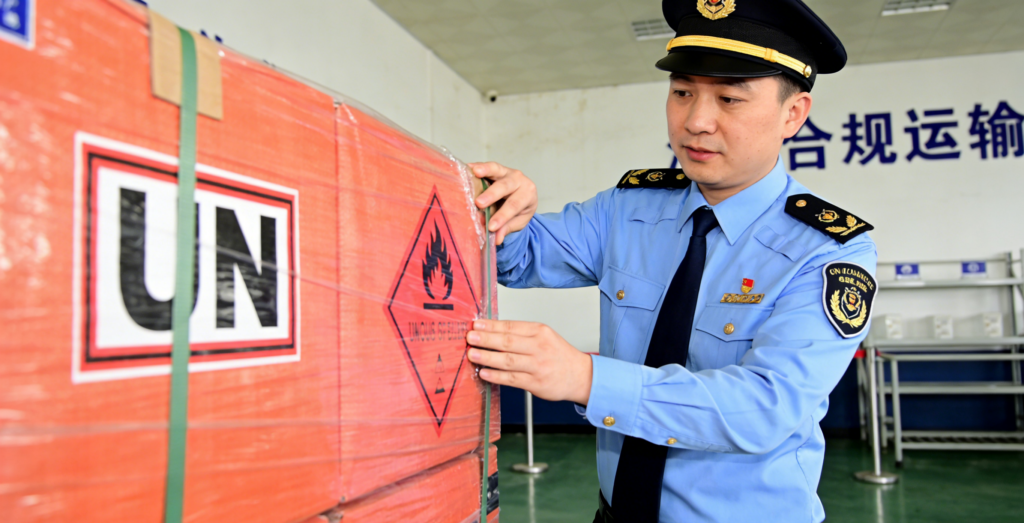
SHIPPING SECURITY DOCUMENTS: YOUR ESSENTIAL GUIDE FOR INTERNATIONAL SHIPPING COMPLIANCE
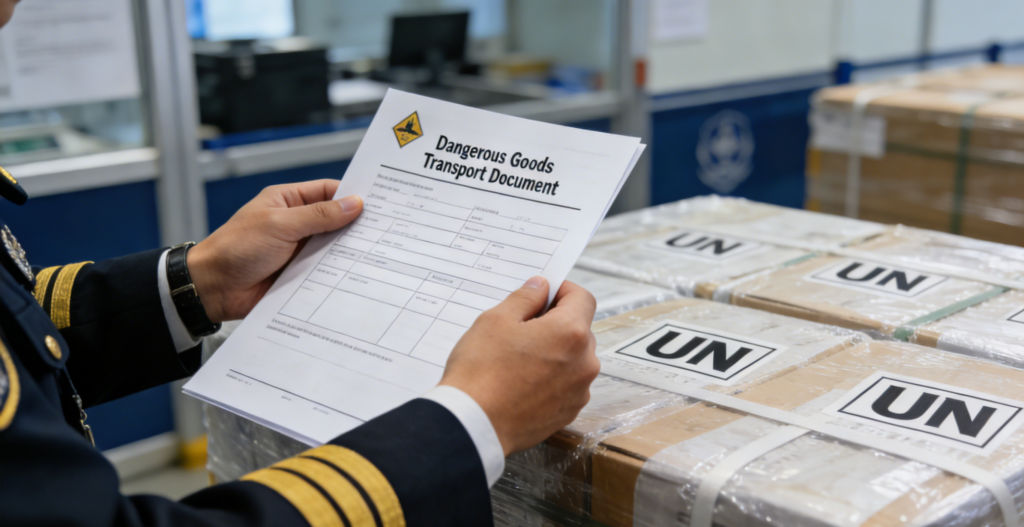
International Shipping Security Documents Guide

What Are Shipping Security Documents & Their Core Roles?

Shipping security documents keep your international freight compliant with global safety regulations. They serve three non-negotiable purposes for every cross-border shipment.
 
First, they ensure your goods meet the importing country’s safety, environmental, and anti-terrorism rules.
 
Additionally, they act as mandatory prerequisites for smooth customs clearance in most destinations.
 
Finally, they drastically cut the risk of cargo detention, fines, or return to the origin port.

Material Safety Data Sheet (MSDS/SDS): For Chemical & Hazardous Goods
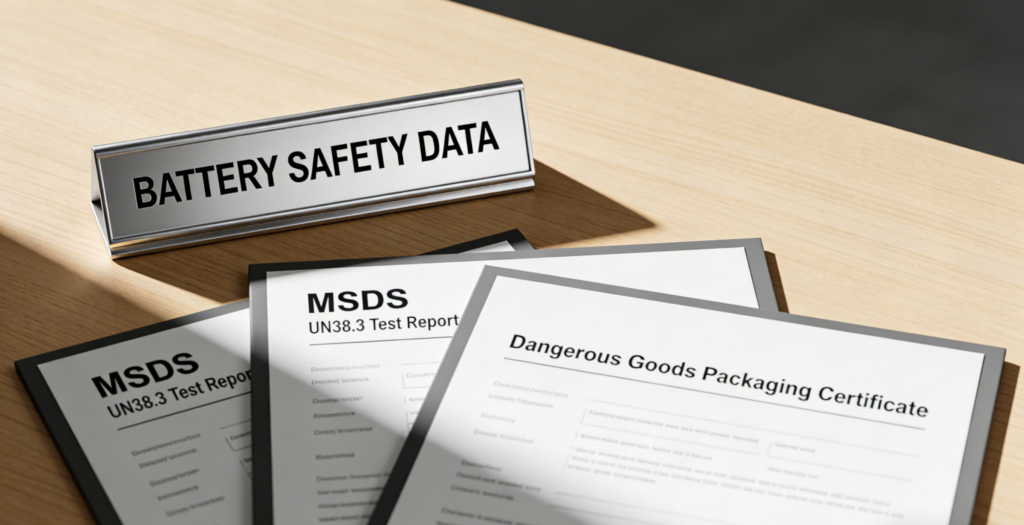
You need an MSDS (also called SDS) when shipping chemicals, batteries, or dangerous goods.
 
This document lists critical details: product composition, physico-chemical properties, safe handling rules, and emergency response steps.
 
Notably, it must follow the Globally Harmonized System (GHS) for chemical classification and labelling.
 
Manufacturers or certified third-party testing agencies can issue a valid MSDS.
 
Furthermore, air and sea carriers often require an MSDS to confirm your cargo’s hazard status. For example, lithium battery shipments need a supporting UN38.3 test report (see full details below) alongside the MSDS.

UN38.3 Test Report: Mandatory for Lithium Battery Shipments

The UN38.3 test report is the global mandatory safety standard for all lithium battery shipments.
 
You need this report for any lithium battery or battery-powered goods, across sea, air, rail, and truck transport.
 
It verifies batteries can withstand transport risks like vibration, impact, extreme temperature, and short circuit.
 
Specifically, it covers 8 rigorous tests set by the United Nations transport regulations.
 
Furthermore, only UN-accredited third-party testing labs can issue a valid UN38.3 report.
 
You must pair this report with a compliant MSDS for carrier review and customs clearance.
 
Notably, most carriers will refuse lithium battery cargo without a valid, up-to-date UN38.3 report.
Shipping Security Documents

Dangerous Goods Packaging Certificate (UN Packaging Certificate)

This certificate, widely known as the “危包证” in Chinese trade, is a mandatory compliance document for dangerous goods packaging.
 

You need this certificate for all dangerous goods shipments via sea, air, rail, or truck.


It proves your packaging meets UN standards, and matches your cargo’s hazard class and packing group.


Valid certificates correspond to a unique UN marking printed on every shipping package.


Additionally, only national competent authorities or accredited third-party agencies can issue this certificate.


It is a non-negotiable prerequisite for issuing a Dangerous Goods Declaration (DGD).


Carriers and customs will reject your cargo if your packaging lacks this valid certification.

Transport Safety Appraisal Report (Sea/Air/Rail/Truck Freight)

This report confirms your cargo’s transport safety classification for all major freight modes.
 
You need this report for goods with potential transport risks, such as battery-integrated devices, magnetic items, powders, and non-hazardous liquids.
 
It clearly states whether your goods are classified as dangerous or non-hazardous for cross-border transport.
 
It also outlines compliant handling rules for carriers and customs authorities.
 
Furthermore, only accredited third-party agencies, compliant with IATA, IMDG, RID, and ADR rules, can issue this report.
 
It helps carriers avoid misclassifying ordinary goods as dangerous cargo, preventing shipment delays.
 
Notably, you cannot get this report retroactively; you must secure it before booking your shipment.

Dangerous Goods Declaration (DGD): For Hazardous Cargo Transit

You must submit a DGD when shipping dangerous goods via sea, air, or road.
 
This document follows strict global codes: IMDG for sea, IATA for air, and ADR for road transport.
 
It includes core details: UN number, hazard class, packing group, and 24/7 emergency contact information.
 
Specifically, only certified dangerous goods transport providers or freight forwarders can issue a compliant DGD.
 
Meanwhile, you must pair the DGD with a valid MSDS, UN38.3 report (for batteries), and Dangerous Goods Packaging Certificate for full compliance.

Pre-Shipment Inspection Certificate (PSI): For Destination Country Compliance

Some countries mandate a PSI certificate before you ship your goods. Common examples include Nigeria’s SONCAP and Kenya’s PVOC programs.
 
This certificate verifies that your cargo matches the importing country’s quality, quantity, and pricing standards.
 
Only third-party inspection agencies designated by the destination country can issue this document. Top providers include SGS and Bureau Veritas.
 
Furthermore, you cannot get a PSI certificate retroactively. You must complete the inspection before loading, or your cargo may face clearance refusal.

Anti-Terrorism Security Filings: For US & EU Shipments

You need to complete anti-terrorism security filings when exporting to strict regulatory markets like the USA and EU.
 
For US-bound shipments, you must submit the AMS (Automated Manifest System) declaration 24 hours before cargo loading. US importers also need to file the ISF (Importer Security Filing) with 10 mandatory data elements.
 
For EU-bound freight, you must submit the ENS (Entry Summary Declaration) before arrival to EU customs.
 
Usually, your freight forwarder or carrier handles these filings. However, you must provide 100% accurate shipment data to avoid delays.

Cargo Insurance Policy: For Transit Risk Protection

A cargo insurance policy protects your goods from accidental loss or damage during international transit. Common risks include sea damage, theft, and weather-related incidents.
 
This document outlines your coverage scope (such as All Risks or FPA), insured value, and clear claim terms.
 
Insurance companies issue these policies, and you can often purchase one through your freight forwarder.
 
Notably, if you use a Letter of Credit (L/C), you must arrange insurance strictly to the L/C terms. For example, you typically need coverage for 110% of the total invoice value.

Bill of Lading (B/L): Critical Security-Related Requirements

The Bill of Lading (B/L) is your core shipping document, and it has strict security-related rules.
 
First, you must clearly mark the cargo’s nature (such as Dangerous Goods) and packaging type (like the IPPC mark) on the B/L.
 
Additionally, every detail on your ocean B/L must exactly match the information on your MSDS, DGD, and supporting safety documents.
 
Even small inconsistencies can lead to customs delays or cargo detention.

Key Processes & Risk Avoidance Tips

Follow these simple steps to keep your shipping security documents fully compliant.
 
First, plan your document timeline carefully. You need to finalize MSDS, UN38.3 reports, and dangerous goods packaging certificates before booking, for carrier review and approval.
 
Meanwhile, you must submit security filings like AMS or ENS 24 to 48 hours before cargo loading.
 
Furthermore, avoid the two most common compliance risks. First, ensure all document details match exactly across all safety reports, B/L, and packing list. Second, check certificate validity before shipment, as some documents have short expiration windows.
 
For special cargo like cold chain freight, you will need additional documents: temperature logger data and sanitary certificates for food or pharmaceutical shipments.
Shipping Security Documents

FAQ About Shipping Security Documents

Do ordinary non-dangerous goods need an MSDS?

Usually no, but some countries’ customs may request an MSDS for specific items like powders or liquids.

What documents do I need to ship lithium batteries?

You will need a compliant MSDS, valid UN38.3 test report, Dangerous Goods Packaging Certificate, and a DGD for air freight.

Can I get a PSI certificate after my shipment leaves?

No, you cannot get it retroactively. You must complete the inspection before shipment to avoid clearance issues.

Is an original insurance policy always required?

It depends on your L/C or sales contract terms. Usually, an original or electronically stamped copy is accepted.

Do I need a Transport Safety Appraisal Report for goods with built-in lithium batteries?

Yes, most carriers require this report for battery-integrated devices. It confirms your goods meet safe transport standards and avoids misclassification as dangerous cargo.

How long is a Dangerous Goods Packaging Certificate valid?

Validity varies by issuing agency, but most certificates apply only to a specific shipment batch. Always confirm validity before booking your freight.

Need tailored support for your international shipment? Share your cargo type, transport mode, and destination country for personalized guidance.