Every year, global supply chains follow a rhythm. Production surges before peak seasons, shipping capacity tightens before major holidays, and freight rates fluctuate accordingly. However, one period consistently attracts experienced importers: the months immediately after Chinese New Year.
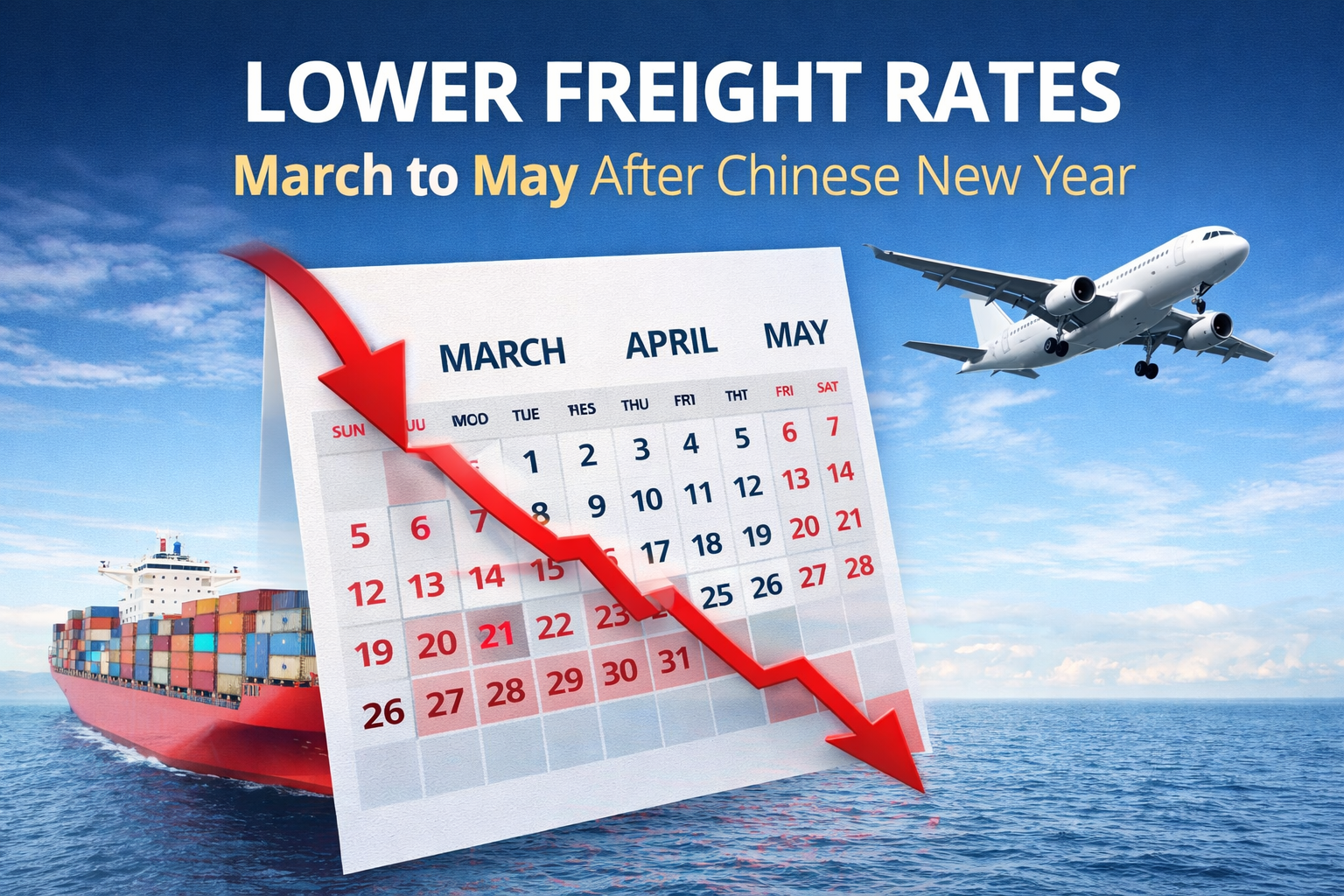
If you ship from China, you may find that March to May often represents one of the lowest freight rate windows of the year. When you understand this cycle and plan your procurement accordingly, you can reduce logistics costs, stabilize inventory flow, and improve overall margins.
Why Freight Rates Drop After Chinese New Year
Chinese New Year usually falls between late January and mid-February. Before the holiday, factories rush to complete orders, and exporters push shipments out of China. As a result, carriers raise rates due to tight space and high demand.
However, once the holiday ends, the market behaves differently.
First, factories resume production gradually rather than instantly reaching full capacity.
Second, many overseas buyers temporarily pause ordering while they evaluate Q1 sales performance.
As a result, shipping demand softens — and when demand decreases, freight rates follow.
Shipping lines and airlines adjust pricing to stimulate volume, especially from March through May. This seasonal correction often creates a cost-effective shipping window before the mid-year peak season begins.
March to May: A Strategic Procurement Advantage
If you plan your sourcing cycle carefully, you can leverage this freight rate dip to your advantage.
1. Lower Ocean Freight Rates
Sea freight rates frequently stabilize or decline during this period. Carriers seek to maintain vessel utilization, so they offer more competitive pricing.
For importers moving full container loads (FCL) or less-than-container loads (LCL), even small rate reductions can significantly impact total landed cost.
2. Competitive Air Freight Pricing
Air freight demand also softens after the holiday rush. Airlines that previously faced capacity constraints may offer improved rates to fill available cargo space.
If your products require faster transit times, March to May often provides better cost efficiency than peak season months like August or November.
3. Reduced Congestion Risk
During peak seasons, port congestion increases transit time and storage costs. After Chinese New Year, port operations typically run more smoothly.
When vessels depart on schedule and customs clearance flows efficiently, your supply chain becomes more predictable — and predictability reduces hidden costs.
How Early Procurement Lowers Your Total Cost
Lower freight rates alone do not guarantee savings. However, when you combine favorable shipping costs with strategic purchasing, you create real financial advantages.
For example:
You negotiate production earlier, before factories reach peak load.
You secure stable raw material pricing.
You avoid urgent air shipments later in the year.
You build inventory before Q3 demand increases.
In other words, when you act early, you control both production and logistics variables.
Moreover, if your products have stable demand throughout the year, shipping during the March–May window allows you to distribute costs more evenly instead of absorbing peak-season surcharges.
Comparing Freight Cycles Throughout the Year
To understand why this period matters, consider the typical annual freight cycle:
January–February: Pre-holiday rush and factory shutdowns
March–May: Demand recovery phase and pricing correction
June–July: Gradual volume increase
August–October: Peak season for back-to-school and holiday inventory
November–December: Year-end shipments and selective congestion
While global events can disrupt this pattern, the post-Chinese New Year adjustment remains one of the most consistent opportunities for cost control.
Planning Ahead: Practical Steps
If you want to benefit from the freight rate dip after Chinese New Year, you should:
Forecast your annual demand before Q1 ends
Confirm supplier production schedules early
Compare air and sea freight options
Monitor weekly rate trends with your freight forwarder
Lock in contracts when rates reach favorable levels
Because freight markets move dynamically, you should not wait until peak season returns. Instead, proactive coordination ensures that you capture lower pricing while capacity remains available.
Risk Considerations
Although March to May often presents lower freight rates, you should still evaluate:
Currency fluctuations
Inventory holding costs
Market demand uncertainty
Geopolitical or fuel-related surcharges
Cost savings must align with your cash flow strategy. Therefore, smart procurement requires both logistics awareness and financial planning.
FAQ – Shipping After Chinese New Year
1. Are freight rates always lower after Chinese New Year?
While no market guarantees stability, historical trends often show softer pricing between March and May compared to peak season months.
2. Does this apply to both sea freight and air freight?
Yes, both modes typically experience reduced demand during this period, although pricing dynamics may differ by route.
3. Should I increase inventory during this window?
If your product has steady demand and sufficient storage capacity, shipping earlier at lower rates can reduce overall annual logistics costs.
4. When does peak season usually begin?
Peak season often starts around August and continues through October, driven by retail and holiday demand.
5. Can I lock in long-term freight contracts during this period?
Yes. Many carriers and forwarders negotiate competitive contract rates during lower-demand months.
Shipping Thoughts
Freight cost management does not depend on luck. Instead, it depends on timing, planning, and market awareness.
The months following Chinese New Year — especially March through May — often offer one of the most attractive freight pricing windows of the year. When you align procurement schedules with this seasonal dip, you lower transportation costs, improve margin control, and reduce peak-season pressure.
If you plan your sourcing strategy early, you do not simply react to freight rates — you use them to strengthen your competitive position.