Introduction
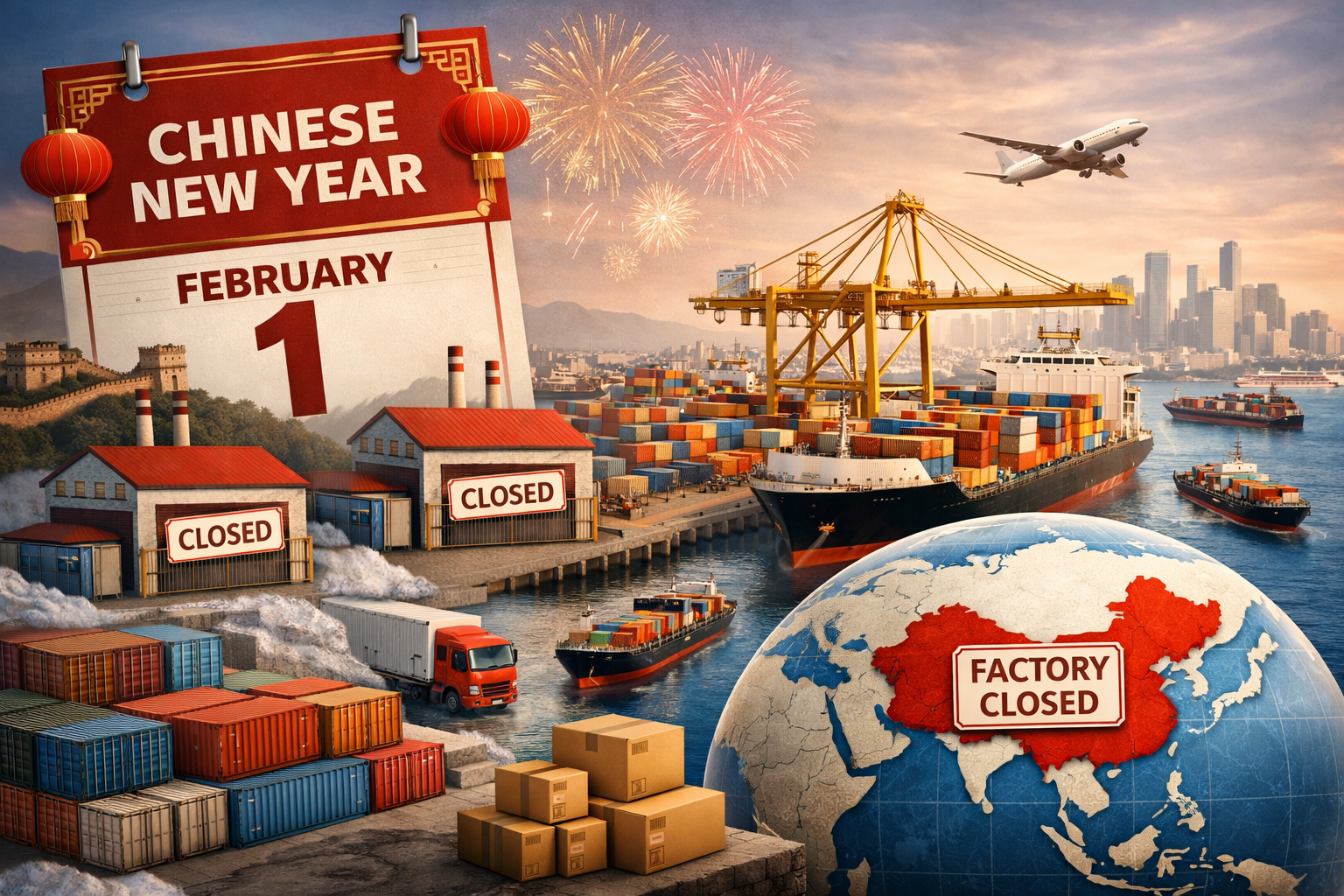
Chinese New Year (CNY), also known as the Spring Festival, is the most important holiday in China. While it is a time for family reunions, it can pose serious challenges for global supply chains. Every year, factory shutdowns, labor shortages, and port congestion lead to shipping delays worldwide.
If you source products from China or rely on China-based manufacturing, early planning is essential. In this guide, we explain how Chinese New Year affects production and cargo shipping—and what you can do to minimize risks.
Why Chinese New Year Disrupts the Supply Chain
Chinese New Year usually falls between late January and mid-February. Unlike short public holidays in other countries, CNY often causes weeks of operational downtime.
Key reasons for disruption include:
Factory shutdowns lasting 1–3 weeks or longer
Workers returning to hometowns, with delayed post-holiday returns
Reduced production capacity before and after the holiday
Port congestion and equipment shortages
Limited trucking and inland transport availability
As a result, even businesses that plan to ship during the holiday often face unexpected delays.
Impact on Manufacturing and Production
Production slowdowns typically begin 2–4 weeks before Chinese New Year. Many factories stop accepting new orders early to clear existing workloads.
Common production risks include:
Delayed raw material supply
Shortened working hours
Incomplete orders before shutdown
Workforce turnover after the holiday
In some cases, factories resume operations slowly, as not all workers return immediately. This can further extend lead times well into March.
How Chinese New Year Affects Cargo Shipping
Shipping capacity tightens significantly before the holiday. Exporters rush to move cargo, which leads to:
Higher freight rates
Limited vessel and flight space
Rollovers due to overbooked sailings
Longer transit and handling times
After the holiday, backlogs at factories and ports often cause secondary delays, especially for sea freight.
How to Prepare Your Shipments in Advance
Proper planning can help you avoid costly disruptions. Here are key steps to take:
1. Ship Earlier Than Usual
Aim to ship at least 3–4 weeks before CNY. For sea freight, earlier is better.
2. Confirm Factory Cut-Off Dates
Each supplier may close at different times. Always confirm final production and dispatch dates in writing.
3. Build Safety Stock
If possible, increase inventory levels to cover the holiday period and post-holiday recovery.
4. Secure Freight Capacity Early
Book vessels, flights, and trucking services well in advance to lock in space and rates.
5. Work with an Experienced Freight Forwarder
A professional forwarder can help adjust routes, monitor schedules, and suggest alternative solutions during peak season.
Common Mistakes to Avoid
Assuming factories reopen immediately after the holiday
Waiting too long to confirm bookings
Ignoring inland transport constraints
Underestimating post-holiday congestion
Avoiding these mistakes can significantly improve supply chain reliability.
FAQ: Chinese New Year and Shipping
Q1: How long do factories close for Chinese New Year?
Most factories close for 1–2 weeks, but production disruption can last up to a month.
Q2: Is shipping completely stopped during Chinese New Year?
No, but capacity is limited. Many services operate with reduced schedules.
Q3: When should I place orders before CNY?
Ideally, place orders 2–3 months in advance to ensure timely production and shipment.
Tips
Chinese New Year is a predictable but often underestimated supply chain risk. With proper planning, early bookings, and clear communication with suppliers and logistics partners, you can avoid disruptions and protect your delivery timelines.
Preparation is not just recommended—it is essential for smooth international shipping during this period.