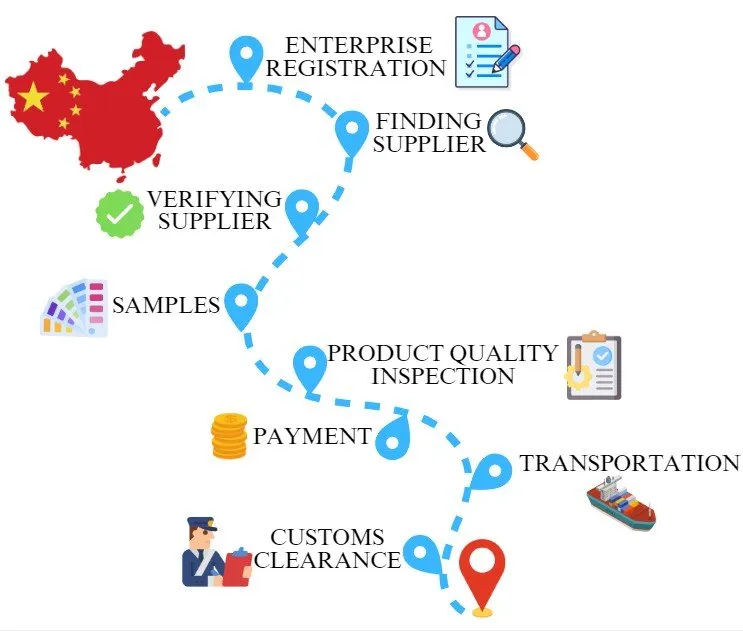
China remains one of the world’s leading manufacturing and sourcing hubs, offering huge opportunities for businesses to buy quality products at competitive prices. However, navigating the process of finding reliable suppliers and successfully importing products requires planning, research, and careful execution. Here’s a comprehensive guide to help you get started.
1. Understand Where to Look for Suppliers
B2B Online Marketplaces
Online B2B platforms are the most common starting point for overseas buyers:
Alibaba – Global directory of manufacturers and trading companies. Buyers can filter by product category and supplier verification.
Made-in-China, Global Sources, 1688, DHgate – Other popular sites with different strengths (e.g., local suppliers on 1688 often offer lower prices).
Search Engines & Directories
Use Google or Bing with specific keywords related to your product niche to find supplier websites directly. You can also explore directories that list industry contacts.
Trade Fairs & Exhibitions
Trade shows such as the Canton Fair allow you to meet hundreds of suppliers in person, inspect products firsthand, and build relationships that help with negotiation and quality assurance.
Wholesale Markets
Visiting local wholesale markets (e.g. Yiwu Market for small commodities) is another way to source products live. These markets have thousands of stalls and suppliers in one place.
Verify and Evaluate Potential Suppliers
Finding suppliers is just the first step — ensuring they are reliable is the most important. Consider these methods:
Check Credentials and Track Record
Look for suppliers with business licenses, certificates (such as ISO or industry standards), and a solid history of operations.
Communication & Responsiveness
A supplier’s communication style (quick response time, clear English) often reflects their professionalism and commitment.
Request Samples
Always request product samples before placing bulk orders. This allows you to check quality and compatibility with your specifications.
Third-Party Inspections
You can hire inspection agencies (e.g., SGS, Bureau Veritas) or conduct virtual factory tours to verify production capacity and quality control systems.
Negotiate Terms and Place Orders
Once you’ve identified suitable suppliers
Clear Specifications
Provide detailed product requirements (sizes, materials, packaging, brand labels, etc.) in writing.
Payment Terms
A common payment structure is 30% deposit upfront and 70% balance after inspection or before shipment — this reduces risk compared to full payment upfront.
Contracts
Use clear contracts with delivery timelines, quality standards, and penalties if terms are not met.
Logistics and Shipping Considerations
After placing orders:
Choose shipping methods that fit your timeline and budget (air freight for speed, sea freight for cost savings).
Check customs requirements and import duties in your destination country to avoid surprises.
Optional: Hire Agents or Sourcing Services
If the process seems daunting, you can work with:
Sourcing agents — local experts who help find suppliers, communicate in Chinese, and negotiate terms.
Full sourcing service providers — handle end-to-end processes including quality control and shipping.
Final Tips
Start small — test suppliers with smaller orders before scaling up.
Build long-term relationships — reliable suppliers can grow with your business.
Always protect yourself with clear agreements and quality checks before shipment.
Related Posts
- Sourcing from China: A Practical Guide to Using Alibaba
- China E-Vehicle Buying Guide: How to Choose and Import Electric Bikes, Scooters, and Motorcycles
- China’s Most Influential Furniture Procurement Guide
- Beginner’s Guide Before Shipping from China: What Importers Must Confirm in Advance
- 🎄Christmas Sourcing and Stock Preparation Guide from China