In recent weeks, one topic has come up repeatedly in conversations with our clients:
“Why are freight costs suddenly increasing again?”
The answer is increasingly clear.
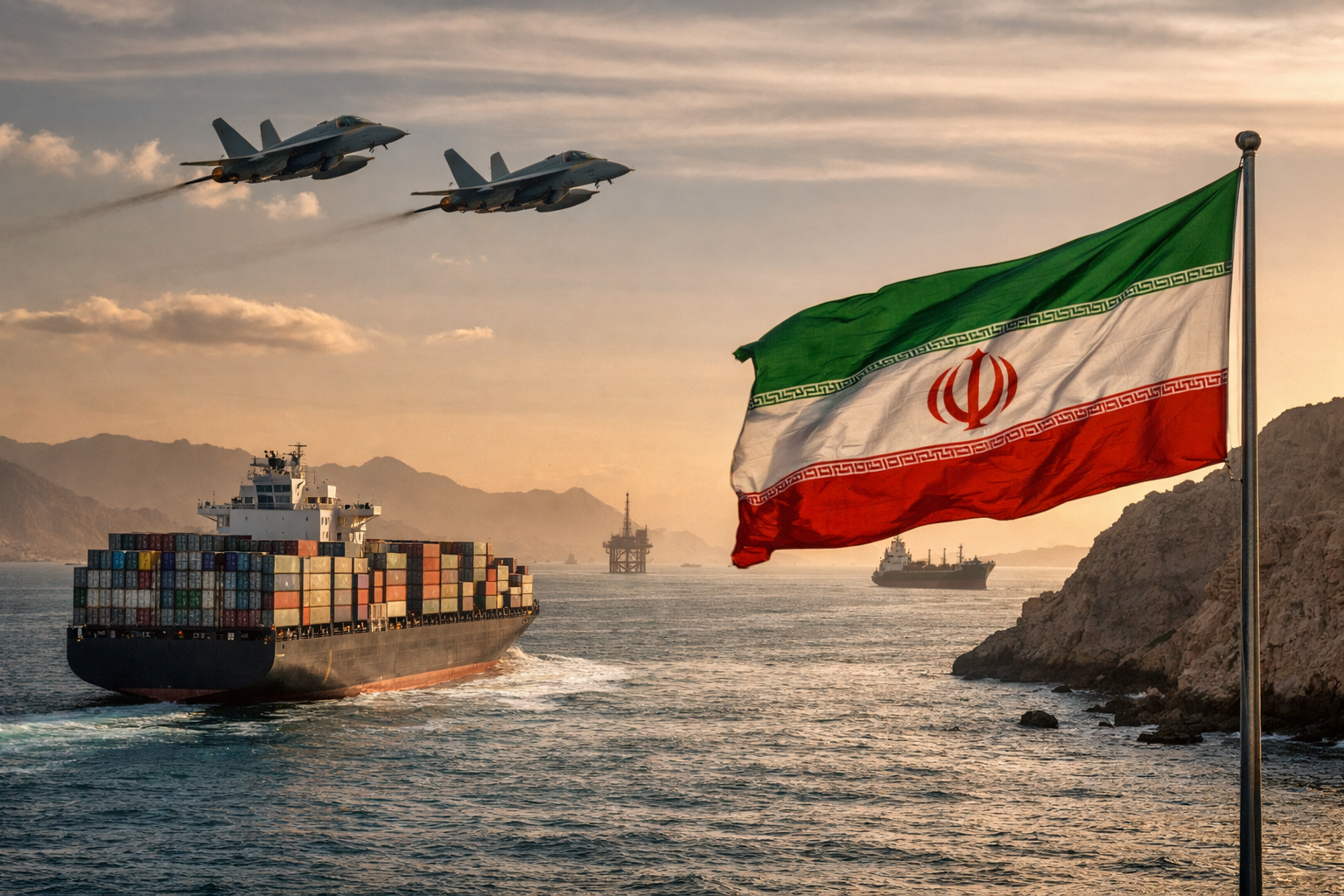
Tensions involving Iran have pushed the Persian Gulf into a high-risk zone. And in global shipping, risk rarely stays local—it quickly shows up in pricing, transit times, and capacity.
From our position as a China-based freight forwarder, this shift is already visible in day-to-day operations.
🚢 A Critical Route Under Pressure
The situation centers around the Strait of Hormuz, one of the most important shipping corridors in the world.
Roughly 20% of global oil trade passes through this narrow route, making it highly sensitive to disruption.
Recently, vessel movement has changed dramatically:
Daily ship traffic has dropped sharply
Some operators are delaying entry into the Gulf
Others are rerouting or suspending services
In some reports, tanker traffic has fallen by over 90% within days.
When capacity disappears that quickly, freight markets don’t adjust slowly—they spike.
Container Freight Rates Are Starting to Climb
At first, most of the impact was seen in tanker markets. But that is no longer the case.
Container shipping is now feeling the pressure, and the pattern is familiar:
Fewer vessels calling Middle East ports
Increased congestion at transshipment hubs
Schedule reliability declining
At the same time, global capacity is tightening. When ships are pulled out of one region, other routes become more crowded.
As a result, container freight rates on Asia–Middle East and Asia–Europe routes have already increased by approximately 15% to 30% in the short term, depending on routing and carrier.
This is often how a larger rate cycle begins—not with a spike everywhere, but with pressure building across key lanes.
Insurance Costs Are Quietly Driving Prices Higher
One factor many shippers overlook is insurance.
War risk premiums in the region have surged sharply, in some cases increasing by several hundred percent compared to normal levels.
At the same time:
Some insurers have reduced coverage
Others require additional premiums or restrictions
For carriers, this changes the economics of the route. And ultimately, these costs are passed down the chain.
So even if base freight rates appear stable at first, total logistics costs are rising underneath.
Supply Chain Risk Is Increasing—Not Just Costs
From a logistics perspective, the bigger issue is not just higher prices—it’s uncertainty.
Here’s what we are currently seeing in real shipments:
1. Transit Times Are Less Predictable
Route adjustments and port congestion are adding 7–14 days in some cases.
2. Capacity Can Change Quickly
A service that is available today may be suspended next week.
3. Cost Planning Is More Difficult
Freight, insurance, and fuel surcharges are all moving at once.
This combination turns a pricing issue into a supply chain risk management challenge.
What This Means for China Exporters
Even if your cargo does not directly pass through the Gulf, the impact is still real.
For exporters shipping from China:
Middle East routes may face delays or blank sailings
Europe-bound cargo may see indirect cost increases
Vessel repositioning can tighten space at major Chinese ports
In short, this is not a regional disruption—it is affecting global shipping dynamics.
Alternative Shipping Solutions to Consider
In uncertain conditions, flexibility matters more than ever. Based on current market conditions, here are some practical options:
1. China–Europe Rail Freight
Rail has become a reliable alternative for certain cargo types.
Transit time: around 15–20 days
Less exposure to maritime disruptions
More predictable scheduling
2. Adjusted Sea Routes
Some carriers are avoiding high-risk zones by using alternative routes.
While this may increase transit time slightly, it can reduce risk and improve reliability.
3. Multimodal Transport
Combining sea, rail, and trucking can help balance cost and transit time.
For example:
Ship to a stable hub
Continue inland via rail or truck
4. Earlier Booking and Flexible Planning
Simple adjustments can make a big difference:
Book space earlier than usual
Keep routing options open
Avoid last-minute shipments
What Happens Next?
Much depends on how the situation develops.
If tensions ease, shipping markets could stabilize relatively quickly. However, if disruptions continue, we may see:
Further increases in freight rates
Ongoing insurance volatility
Longer-term shifts in global shipping routes
From experience, markets like this rarely move in a straight line. Short-term fluctuations are likely, but underlying risks may persist.
FAQ
Why are Persian Gulf shipping costs rising?
Because geopolitical tensions have reduced vessel traffic, increased insurance costs, and disrupted normal shipping operations.
How much have container shipping rates increased?
On affected routes, rates have already risen by around 15%–30% in the short term.
Is the Strait of Hormuz closed?
No, but traffic is heavily restricted and many operators are proceeding cautiously.
What is the biggest risk for shippers right now?
Uncertainty in transit times, vessel availability, and rapidly changing costs.
What are the best alternatives to sea freight?
Rail freight and multimodal transport are currently the most stable alternatives, depending on cargo type and destination.
If you are planning shipments from China and need a more stable and cost-effective logistics solution, working with an experienced freight forwarder can help you navigate market uncertainty with greater confidence.