When cargo arrives in the United States, U.S. Customs and Border Protection (CBP) may decide to inspect the shipment before it can be released. In some cases, importers or freight forwarders receive a notice called a “5H Customs inspection.”
Although many shippers are familiar with general customs examinations, fewer understand what the 5H inspection code actually represents. As a result, shipments can face delays, storage costs, and uncertainty.
In this article, we explain what a 5H inspection is, why CBP selects shipments for it, and how importers can reduce the risk of delays.
What Is a 5H Customs Inspection?
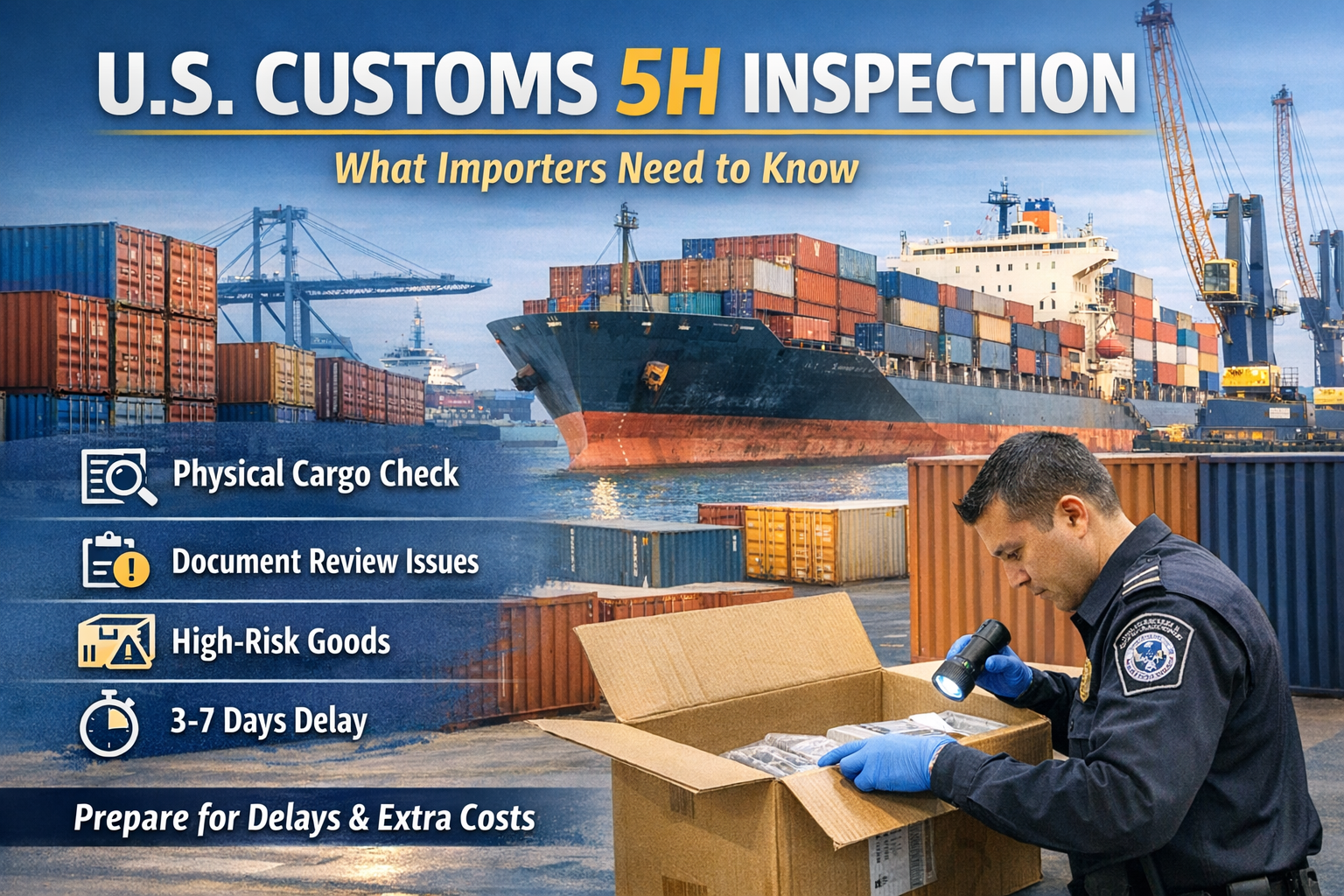
A 5H inspection is a type of U.S. customs examination initiated by Customs and Border Protection. In practice, it usually indicates that CBP wants to perform a manual inspection of cargo after reviewing documentation or scanning results.
In most cases, the process involves the following steps:
CBP flags the shipment in the customs system.
The container is moved to an examination site.
Customs officers open the cargo and inspect the goods physically.
After the inspection, CBP decides whether to release the shipment or request additional documentation.
Because the container must be transported to an inspection facility and handled manually, the process often takes several days to complete.
Why Does CBP Select a Shipment for 5H Inspection?
Customs authorities do not select shipments randomly. Instead, CBP uses risk-assessment systems, shipment data, and enforcement priorities to decide whether cargo requires further inspection.
Several common factors may trigger a 5H inspection.
1. Inconsistent or Incomplete Documentation
First, inaccurate or incomplete paperwork frequently causes problems. If the commercial invoice, packing list, or bill of lading contains conflicting information, customs officers may decide to inspect the cargo.
For example:
Product descriptions are too vague
Declared values appear inconsistent
HS codes do not match the product description
Therefore, clear and accurate documentation significantly reduces inspection risk.
2. High-Risk Commodities
Certain product categories attract more attention from customs authorities. For instance, CBP often inspects shipments containing:
Electronics
Batteries
Textiles and apparel
Counterfeit-risk products
Food or agricultural goods
Because these items involve safety regulations or intellectual property concerns, customs officers tend to review them more carefully.
3. First-Time Importers or New Suppliers
Customs risk systems also analyze shipping history. If an importer or supplier has little or no import record, CBP may request a physical inspection to verify the cargo.
However, once companies establish a consistent compliance record, inspections often become less frequent.
4. Random Compliance Checks
Occasionally, CBP conducts inspections simply to maintain enforcement standards. Even compliant shipments may undergo inspection as part of routine monitoring.
What Happens During a 5H Inspection?
Although procedures may vary slightly between ports, the general process follows a predictable sequence.
Step 1: Inspection Notice
The freight forwarder or customs broker receives a message indicating that CBP has placed a hold on the shipment.
Step 2: Container Transfer
Next, the container moves from the port terminal to a Customs Examination Station (CES). This transfer usually requires trucking and handling arrangements.
Step 3: Physical Cargo Examination
Customs officers then open the container and check the cargo. They may verify:
Product quantity
Product description
Country of origin labels
Compliance with import regulations
Step 4: Cargo Release
Finally, once officers complete the inspection, CBP either releases the shipment or requests additional information.
If everything matches the documentation, the container typically returns to the terminal and continues the delivery process.
How Long Does a 5H Inspection Take?
The duration varies depending on several factors. However, most inspections follow this general timeline:
| Process Stage | Typical Time |
|---|---|
| Container transfer to CES | 1–2 days |
| Inspection scheduling | 1–3 days |
| Physical inspection | 1 day |
| Release processing | 1–2 days |
In total, a 5H inspection may delay a shipment by 3 to 7 days. During busy seasons, delays can last even longer.
Costs Associated With a 5H Inspection
Importers should also prepare for additional charges. Since customs inspections require extra handling, several fees may apply:
CES examination fee
Container drayage (transport to inspection site)
Terminal handling charges
Storage or demurrage
As a result, the total cost of an inspection can range from $300 to over $1,000, depending on the port and cargo size.
How Importers Can Reduce Inspection Risks
Although importers cannot completely avoid customs inspections, they can significantly reduce the risk.
Provide Accurate Documentation
First and foremost, always ensure that invoices and packing lists contain detailed and accurate product descriptions.
Use Correct HS Codes
Second, verify that the HS codes match the product category. Incorrect classification often triggers additional review.
Work With Experienced Freight Forwarders
A knowledgeable freight forwarder or customs broker can review documents before submission. Consequently, they can identify potential issues early.
Maintain Compliance Records
Finally, companies with a strong compliance history typically face fewer inspections over time.
FAQ
What does 5H mean in U.S. Customs inspection?
A 5H code generally indicates that Customs and Border Protection requires a manual inspection of cargo after documentation or security screening. Officers open the container and verify the goods physically.
How long does a 5H customs inspection take?
Most 5H inspections take three to seven days, depending on port congestion and inspection scheduling.
Who pays for a customs inspection?
In most cases, the importer or cargo owner is responsible for inspection-related costs, including CES handling and transportation fees.
Can a freight forwarder prevent a 5H inspection?
No company can guarantee that a shipment will avoid inspection. However, accurate documents, proper classification, and regulatory compliance can significantly reduce the chances.
Does a customs inspection mean there is a problem?
Not necessarily. Many inspections occur simply because customs authorities conduct routine compliance checks.
Related Posts
- Beginner’s Guide Before Shipping from China: What Importers Must Confirm in Advance
- UPS Customs Clearance Value Limits: When Personal Importers Can No Longer Self-Clear
- Shipping from China to the USA: A Complete Guide for Importers in 2026
- Understanding Container Weight Balance and Uneven Loading in International Shipping
- Why Railway Freight Completely Refuses Battery Cargo